
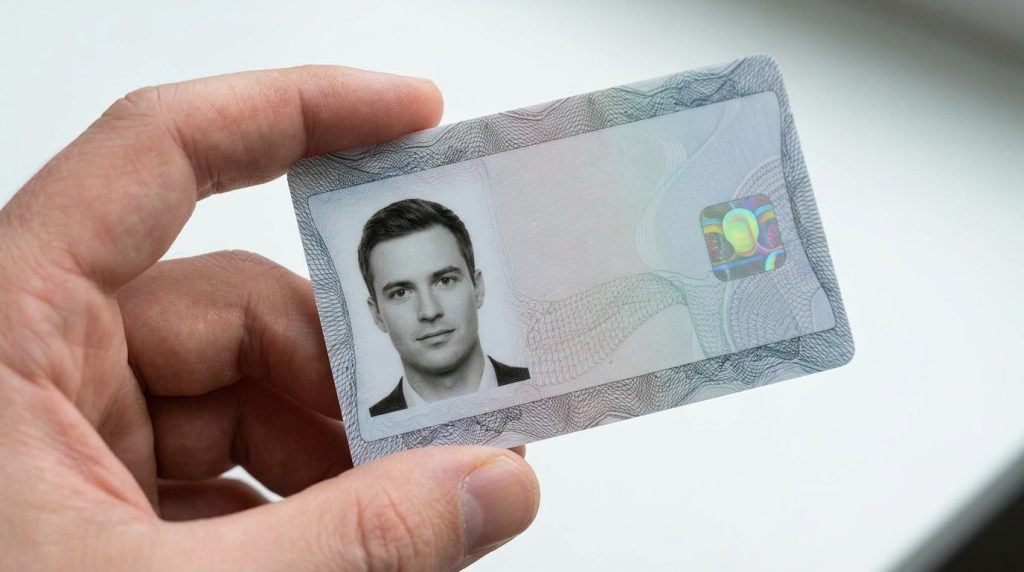
In an increasingly digital world, the physical security of identification documents has undergone a massive technological transformation. For educational institutions, security professionals, and novelty collectors alike, the ability to distinguish between a basic replica and a high-fidelity document is a critical skill. Understanding how to identify high-quality ID security features requires a look beyond the surface level into the world of material science and optical engineering.
When evaluating the integrity of a modern document, experts often refer to specialized resources. One of the industry benchmarks for understanding these complex layers is the technical breakdown found at https://idtop.ph/idgod-security-education, which serves as an essential guide for those looking to master the art of verification.
The Foundation: Polycarbonate and Teslin Materials
The first step in identification starts with the “feel” of the card. Professional-grade documents have moved away from standard PVC in favor of Polycarbonate (PC) or Teslin.
- Polycarbonate (PC): This material is unique because the layers are fused together using heat and pressure, creating a solid monolithic structure. If you drop a PC card on a hard surface, it will emit a metallic “ring” rather than a dull plastic thud.
- Tactile Elements: High-quality cards feature “raised” or “embossed” text. Using your fingernail to feel the date of birth or the signature is a primary method for how to identify high-quality ID security features; if the text is perfectly flat, it is likely a lower-tier print.
Optical Security: OVI and Holographic Overlays
Optical security is where the most advanced engineering occurs. A high-quality document will utilize Optically Variable Ink (OVI). This ink changes color—typically from gold to green or pink to blue—depending on the angle of the light. Unlike a cheap sticker, OVI is crisp and integrated into the design.
Furthermore, look for “Fine Line” or “Guilloche” patterns. These are the complex, swirling lines found in the background of the ID. On a high-quality document, these lines are continuous and never blurry, even under a magnifying glass. This level of detail is a hallmark of professional production and is a key focus for those studying how to identify high-quality ID security features through resources like https://idtop.ph/idgod-security-education.
Digital Integrity: Barcodes and UV Light
A document can look perfect but fail at the digital level. The PDF417 2D barcode on the reverse side must be perfectly synced with the data on the front. Professionals use “scanners” to ensure the checksums and formatting match government standards.
Additionally, the use of ultraviolet (UV) light remains a gold standard for verification. A high-quality ID will feature “hidden” images or text that only glow under a specific UV spectrum. On premium documents, these UV features are “multi-colored” and sharp, rather than the faint, single-color glows found on amateur replicas.
Conclusion: The Importance of Education
As document security continues to evolve, staying informed is the best defense against substandard quality. By focusing on material sounds, tactile responses, and optical shifts, anyone can learn the basics of professional authentication. For those seeking a deeper dive into the specific mechanics of these layers, visiting https://idtop.ph/idgod-security-education provides the technical clarity needed to stay ahead in the field of document security.
