
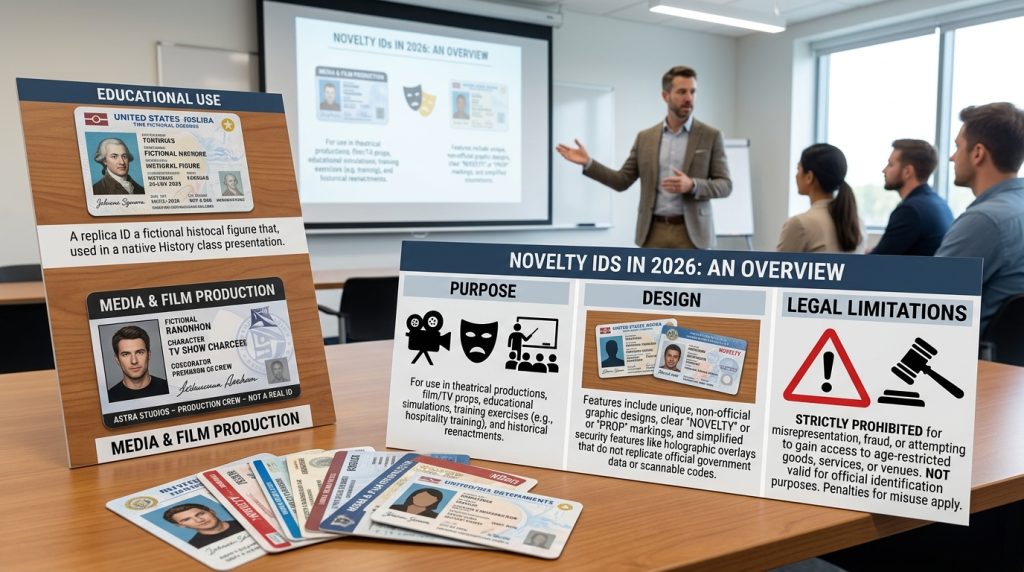
In 2026, the distinction between various types of identification has become a topic of significant interest for collectors, film producers, and educators alike. While the world moves toward increasingly digital formats, the physical card remains a staple of our social and professional infrastructure. Understanding the nuances of these items—specifically their purpose, construction, and the laws governing them—is essential for anyone looking to use them for legitimate projects.
Understanding the Differences
When discussing non-official identification, the most common comparison is novelty ID vs real ID. A “Real ID” is a government-issued document that meets federal security standards for boarding aircraft or entering high-security facilities. These cards are backed by official databases and encrypted technology.
In contrast, a novelty ID is a replica designed to look realistic but intended solely for non-official use. These are not legal identification documents. Instead, they serve as high-quality props or “placeholders” in environments where a real document would be unnecessary or a security risk. By 2026, the craftsmanship of these replicas has reached a point where they can mimic the weight, texture, and visual depth of genuine cards, making them ideal for high-definition film sets.
Purpose and Utility in 2026
Modern novelty IDs serve several critical functions in professional sectors:
- Media and Entertainment: For television and film, authenticity is key. Producers use professional-grade replicas to ensure that close-up shots of a character’s wallet look believable to the audience.
- Educational Training: Law enforcement academies and security training programs often use these cards as visual aids. They allow trainees to study layout variations and tactile features in a controlled, safe environment.
- Theatrical Props: Stage plays and live performances require durable items that can withstand the rigors of a nightly touring schedule while maintaining a professional appearance.
The Art of the Card: Design and Safety
Creating a realistic replica involves a complex manufacturing process. Those interested in the technical side of production often look for a novelty ID design guide to understand the materials used. Most high-end 2026 replicas utilize Teslin or specialized PVC, which allows for micro-printing and the inclusion of OVI (Optically Variable Ink) that shifts color when tilted.
However, design isn’t just about mimicry; it’s also about safety. Reputable manufacturers include subtle “design breaks” or markings that distinguish the card from a government-issued original upon close inspection. This ensures that the item remains a “novelty” and cannot be easily mistaken for a legal credential in a high-stakes environment.
Legal Boundaries and Responsibility
It is vital to remember that the possession and use of novelty IDs are subject to strict legal limitations. They should never be used to misrepresent one’s identity, age, or authority. In 2026, transparency is the best policy; using these items strictly for their intended purposes—such as education, media production, or as a personalized gift—ensures that they remain a fun and useful tool without crossing into illegal activity. Always prioritize ethical use and stay informed about local regulations regarding replica documents.
