
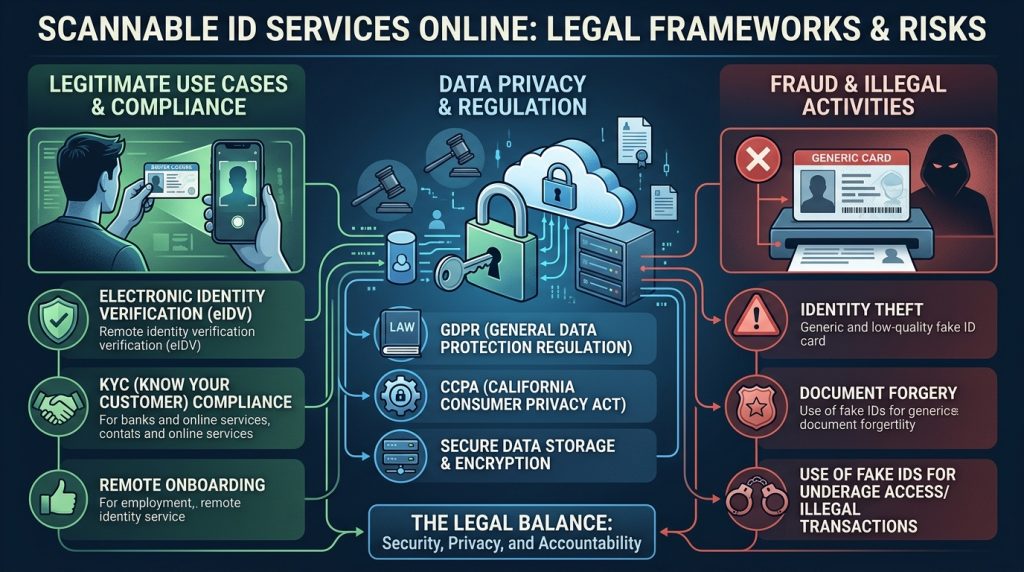
In an era where digital security is paramount, the conversation surrounding identity verification has moved beyond simple document checks. For many consumers, the search for the best fake ID provider often begins as a quest for accessibility but quickly evolves into a complex web of legal and security concerns. Understanding the difference between high-quality craftsmanship and a digital scam is critical for anyone navigating this high-stakes market.
The Evolution of Identity Craftsmanship
The industry has seen a massive shift in technology. Vendors like IDGod and OldIronsides have become household names in specific circles, known for their attention to detail. However, from a legal perspective, the “quality” of these documents is a double-edged sword. While advanced printing techniques, laser-perforated holes, and tactile embossing make these items look authentic, they also increase the potential for serious legal repercussions if intercepted.
When conducting a fake id comparison, users often focus on physical attributes like UV multi-color shifts and micro-printing. While these features are impressive from a technical standpoint, the real risk lies in the digital footprint left behind. Many “budget” providers fail to secure user data, leading to a much larger problem than a confiscated card: permanent identity theft.
Legal Implications and Consumer Safety
It is essential to understand that while a provider may claim to offer “stealth shipping” or “replicated holograms,” the act of purchasing and using these documents carries significant weight. Law enforcement agencies have become increasingly sophisticated, using AI-driven scanners that detect even the most minute inconsistencies in barcode encryption and font spacing.
Key risks to consider include:
- Identity Vulnerability: Providing your personal data to unregulated offshore entities.
- Financial Fraud: The risk of “exit scams” where providers disappear after receiving payment.
- Legal Consequences: Potential felony charges for possession or use of forged government documents.
Finding Legitimate Alternatives
For those looking for the best fake ID provider, it is often more beneficial to look toward legitimate identity solutions. In the professional world, “novelty” items are frequently confused with functional replicas. A thorough fake id comparison shows that even the most “perfect” clone often lacks the encrypted NFC chips found in modern, government-issued biometric IDs. These chips are digitally signed by issuing states, making them virtually impossible to replicate.
Conclusion: Making an Informed Choice
The world of IDGod (including its various domains like .com and .ph) and OldIronsides represents a fascinating look at modern counterfeiting technology. However, the human touch in writing this guide is meant to remind the reader that every digital transaction has a real-world consequence.
While the allure of a high-quality replica is strong, the smartest choice is always to prioritize your long-term legal safety and data privacy. By staying informed about the risks and the technology used by modern scanners, you can better protect your future.
