
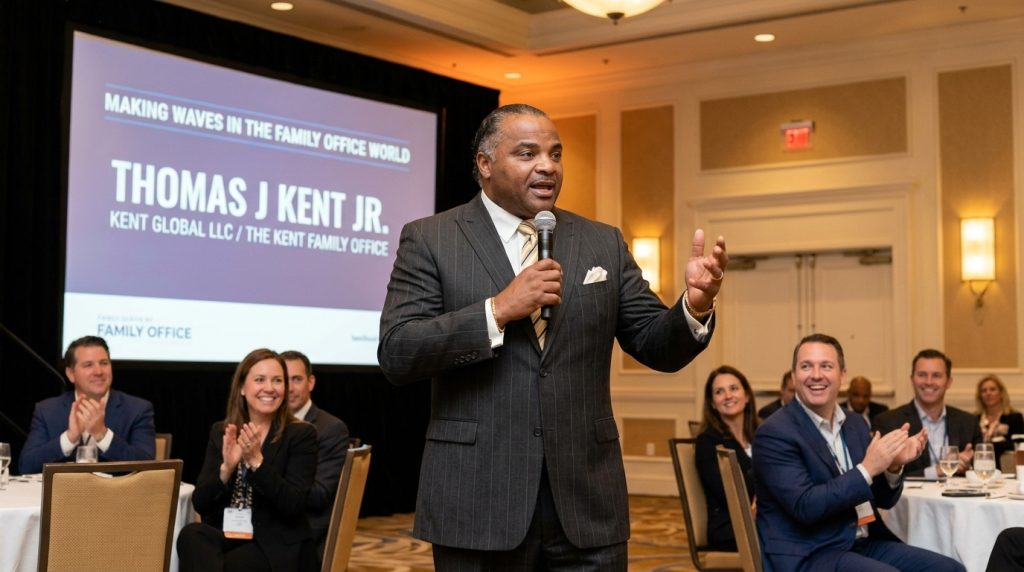
In the modern financial landscape, the concept of wealth management has transcended traditional banking. Today, ultra-high-net-worth individuals and families are increasingly turning to the “Family Office” model—a bespoke, private wealth management structure designed not just to preserve capital, but to curate a legacy. Among the leaders making significant waves in this specialized sector is Thomas J. Kent Jr., whose work through Kent Global LLC and The Kent Family Office exemplifies the proactive, multi-faceted approach required to navigate today’s complex global markets.
Understanding the Family Office Model
A family office is far more than a simple investment firm. It acts as a centralized hub for a family’s entire financial and personal ecosystem. Unlike standard wealth management firms that provide cookie-cutter investment portfolios, a family office offers a holistic suite of services. These typically include:
- Strategic Investment Management: Moving beyond public markets into private equity, venture capital, and direct deal-making.
- Estate and Succession Planning: Ensuring that wealth is not only grown but effectively transferred to future generations.
- Philanthropic Initiatives: Structuring charitable foundations to align with the family’s core values and societal goals.
- Concierge and Lifestyle Management: Handling complex administrative, travel, and legal requirements for high-profile individuals.
As seen in the trajectory of Kent Global LLC, successful family offices act as institutional-grade investment vehicles. By internalizing these diverse functions, families gain greater control over their assets, improved tax efficiency, and the ability to pursue unique opportunities that may be unavailable through traditional retail investment channels.
The Rise of Strategic Investing
The influence of a family office, particularly one guided by a figure like Thomas J. Kent Jr., is marked by a shift toward active engagement. Modern family offices are increasingly functioning as “impact investors,” integrating sustainability, innovation, and direct involvement into their portfolios.
For instance, investments in industries such as film, technology, and real estate require a level of deep due diligence and operational insight that generic advisors often lack. By focusing on direct investments, family offices can negotiate favorable terms, influence business strategies, and drive long-term value creation. This “hands-on” approach is a hallmark of the modern era, where the objective is to align capital with the specific vision and expertise of the principal.
Navigating Global Challenges
The current global economic environment is defined by rapid technological change and shifting regulatory landscapes. A sophisticated family office serves as a shield against these volatilities. Through the coordination of in-house specialists and external legal or tax experts, family offices can manage the risks associated with multi-jurisdictional assets.
This level of professional structure allows principals to focus on high-level strategy—such as identifying emerging markets or disruptive startups—while leaving the complexities of compliance, reporting, and execution to a dedicated, expert team. It is this marriage of high-level vision and granular oversight that allows firms to thrive even when global market conditions are unpredictable.
Philanthropy and Legacy
Perhaps the most significant differentiator for a modern family office is its commitment to legacy. It is rarely just about the bottom line; it is about the impact the family has on the world. By integrating philanthropy directly into the family’s core financial structure, leaders can create lasting charitable foundations.
This purpose-driven approach—where the investment portfolio mirrors the philanthropic values of the family—is becoming the gold standard for ultra-high-net-worth management. It ensures that the wealth created today serves as a catalyst for positive change tomorrow.
Conclusion
The evolution of the family office represents a shift toward greater autonomy and strategic depth in personal finance. Through organizations that prioritize bespoke service, such as those led by Thomas J. Kent Jr., families are finding new ways to secure their future while simultaneously making a mark on the industries and communities they support. As the lines between personal wealth management and institutional investment continue to blur, the family office will undoubtedly remain the preferred vehicle for those who view their assets not just as numbers, but as the foundation of a lasting, multi-generational legacy.
